Key Takeaways
Text neck usually develops from repeated screen use, not one bad afternoon. The good news is that small changes, a careful evaluation, and a practical treatment plan can make a meaningful difference.
- Text neck is a pattern of strain linked to prolonged forward and downward head positioning.
- Symptoms may include stiffness, headaches, shoulder tension, upper-back pain, or arm discomfort.
- A Peoria chiropractor looks at your habits, movement, posture, muscle balance, and possible nerve involvement.
- Treatment may include adjustments, soft-tissue work, exercises, and changes to daily routines.
- Numbness, weakness, severe headaches, dizziness, or balance problems deserve prompt medical attention.
What “text neck” really is—and why your phone may be the culprit
“Text neck” is a useful everyday term for neck strain associated with spending too much time looking down at a phone, tablet, or other screen. It is not a diagnosis by itself, and it does not tell us exactly which tissue is irritated. Still, it describes a very common pattern that can build slowly. If you are searching for text neck treatment Peoria IL chiropractor, the first step is understanding what your symptoms may be telling you.
How repeated looking down strains the neck
Your neck works best when your head is balanced over your shoulders. When your chin drifts toward your chest, the muscles at the back of the neck must work harder to keep your eyes on the screen. Hold that position repeatedly, and the surrounding muscles and joints may become tired, guarded, or less comfortable with normal movement.
The problem is rarely one glance at a phone. It is the repeated pattern: checking messages, reading in bed, scrolling during a break, then returning to a laptop for hours. Your body adapts to the position you practice most, even when that position is not ideal.
Common symptoms, from stiffness to headaches
Many people notice a dull ache or stiffness first, especially after driving, working, or using a phone for a long stretch. Some feel tightness along the base of the skull or between the shoulder blades. Others notice that turning the head feels limited or that the neck takes longer to loosen up in the morning.
Headaches can also occur when the muscles around the neck and upper shoulders remain tense. These symptoms have many possible causes, so a persistent headache should not automatically be blamed on screen posture. A proper evaluation helps put the pattern in context.
Why pain may spread into the shoulders, upper back, or arms
The neck, shoulders, and upper back share muscles and movement patterns. When the head stays forward, the shoulders may round and the upper-back muscles may remain under tension. That can make discomfort feel broader than the neck itself.
Pain, tingling, or altered sensation that travels into an arm deserves more attention. It may reflect irritation involving a nerve, rather than simple muscle fatigue. That distinction matters because the safest next step depends on the findings, not just on where the pain is felt.
The difference between temporary soreness and a recurring problem
Temporary soreness often settles after rest, movement, and a return to more comfortable positioning. A recurring problem keeps returning after ordinary screen use, interferes with sleep or work, or gradually requires more time to settle. That pattern suggests the daily cause has not been addressed.
A useful question is not only, “Where does it hurt?” Ask when it starts, what makes it better, and how long the relief lasts. Those details help separate an occasional flare-up from a problem that merits a more complete assessment.
Why text neck happens in everyday life
Most people do not choose poor posture on purpose. The screen is low, the chair is convenient, the workday runs long, and the same position gets repeated until it feels normal. Text neck can arise from the combined effect of phones, laptops, driving, reading, and quiet evenings on the couch.
The practical fix is not to eliminate screens. It is to make neutral movement easier and prolonged stillness less automatic. If you want a broader look at posture, movement habits, and possible contributing factors, this posture and pain guidance offers a useful starting point.
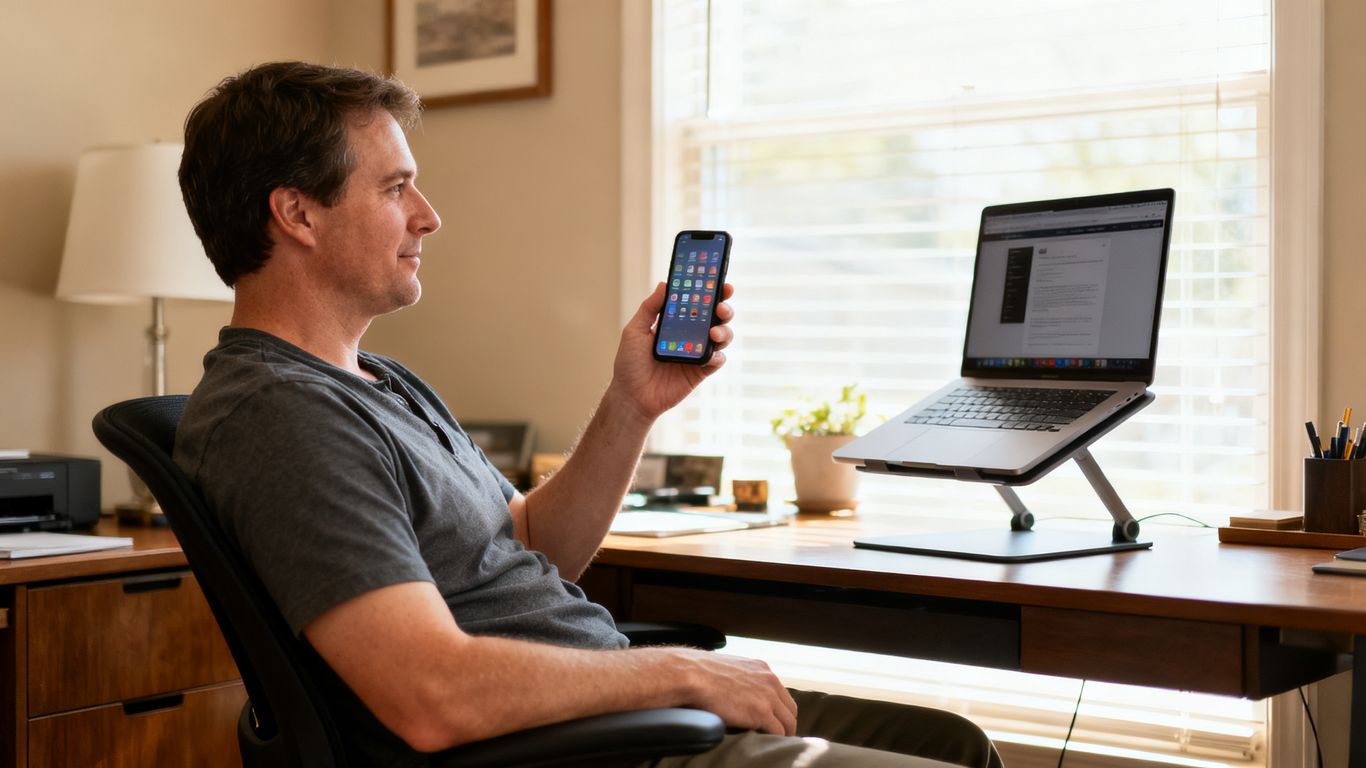
Phone posture, laptop posture, and long workdays
Phones encourage you to bring your eyes down toward your hands. Laptops can do something similar because the keyboard and screen are attached; raising one often means compromising the other. Add meetings, commuting, and household tasks, and the neck may spend much of the day in a slightly bent position.
The issue is usually duration more than a single posture. A comfortable position can still become uncomfortable when held for hours. Changing positions regularly is often more realistic than trying to maintain one perfect posture all day.
How screen height changes the load on your neck
A low screen tends to pull your gaze downward, which often brings the head forward as well. A higher screen lets your eyes look more straight ahead and may reduce the amount of neck flexion needed. The right height depends on the task, your chair, and whether you are reading, typing, or talking on a call.
A simple adjustment can clarify the difference. Notice how your neck feels when your phone is in your lap, then compare that with holding it closer to eye level. The goal is not rigid positioning; it is reducing the amount of time your head stays dropped.
The role of weak upper-back muscles and tight chest muscles
The upper-back muscles help support the shoulder blades and provide a stable base for neck movement. If they are not contributing well, the neck and upper shoulders may do more work than they should. Tightness across the chest can also encourage the shoulders to roll forward.
This does not mean every person with neck pain has weak muscles or a tight chest. It means muscle balance is worth assessing rather than guessing about. A plan that includes appropriate strengthening and mobility work may be more useful than posture reminders alone.
Why stress, poor sleep, and inactivity can make symptoms worse
Stress often changes how people hold their bodies. The shoulders rise, breathing becomes shallower, and muscles may stay braced without the person noticing. Poor sleep can make ordinary soreness feel more intrusive, while inactivity reduces the number of chances the body gets to move through comfortable ranges.
These factors do not make symptoms imaginary. They can influence sensitivity, recovery, and how quickly tension builds. Addressing them alongside screen habits gives the neck a better chance to settle.
How a Peoria chiropractor evaluates text neck
A thoughtful evaluation does more than look at whether your head sits forward. It connects your symptoms with your work setup, phone habits, sleep, activity level, and the movements that reproduce discomfort. That context helps avoid treating a label instead of treating the person.
The goal is not to criticize your posture. It is to identify which habits or movement limits may be keeping the problem active and which changes are reasonable for your daily life in Peoria.
Reviewing your symptoms, habits, and daily movements
The conversation usually begins with timing and behavior. You may be asked when symptoms began, how long they last, whether they follow computer or phone use, and whether driving, exercise, or sleep changes them. Details about numbness, weakness, headaches, and pain traveling into the arm are especially relevant.
Your ordinary movements matter too. Reaching, turning, lifting, sitting, and looking down may reveal patterns that are missed when someone only examines you in a stationary position. Honest details make the evaluation more useful.
Checking posture, range of motion, and muscle balance
A clinician may observe the position of your head, shoulders, and upper back, then compare how the neck moves in different directions. The quality of movement matters, not just how far you can turn. Guarding, asymmetry, or discomfort may point toward areas that need a closer look.
Muscle balance is part of that picture. Tight or overactive muscles can coexist with muscles that are not supporting the area effectively. The findings help shape recommendations rather than forcing everyone into the same exercise routine.
Identifying joint restrictions and possible nerve irritation
Restricted motion in the neck or upper back can change how nearby areas move. An evaluation may include gentle testing of joints, muscles, reflexes, sensation, or strength when symptoms suggest possible nerve involvement. These checks help distinguish a straightforward mobility issue from a pattern requiring additional medical attention.
No single finding proves the cause of pain. The useful answer comes from combining the examination with your history and symptom behavior. That is why a short appointment should still include questions, not just hands-on treatment.
Recognizing when imaging or medical evaluation may be appropriate
Imaging is not automatically needed for every episode of neck discomfort. It may be considered when symptoms are persistent, worsening, associated with significant injury, or accompanied by neurological changes. A medical evaluation may also be appropriate when the pattern does not fit a simple posture-related problem.
A responsible chiropractor should be comfortable explaining when care needs to be coordinated or redirected. Asking for another opinion is not a failure of treatment; it is part of making a sound decision.
Text neck treatment from a chiropractor in Peoria, IL
Treatment should match what the evaluation finds and what you can realistically do between visits. Some people need help with mobility, while others need more attention to muscle endurance, workstation habits, or a symptom that is not primarily posture-related. The phrase text neck treatment Peoria IL chiropractor should lead to an individualized conversation, not a one-size-fits-all promise.
Care may be conservative and progressive, with the response to each step guiding what comes next. The purpose is to improve comfort and function while addressing the habits that may be contributing to the problem.

Chiropractic adjustments to improve neck and upper-back mobility
Chiropractic adjustments may be used to address restricted movement in the neck or upper back when they are appropriate for the person being treated. The technique, area, and intensity should depend on the examination and the patient’s comfort.
The aim is not to force the neck into a position. It is to support more comfortable mobility within a broader plan that may also include exercises and daily movement changes. Any treatment should be discussed clearly before it begins.
Soft-tissue techniques for tight muscles and trigger points
Hands-on soft-tissue work may be used when muscles around the neck, shoulders, or upper back feel tight or tender. The pressure should be tolerable, and soreness afterward is not a measure of whether care was effective. Gentle work can be especially useful when guarding makes normal movement feel difficult.
Soft-tissue care is usually one part of treatment rather than the entire answer. If the same sitting and screen habits continue unchanged, tension may return. That is why home guidance belongs in the conversation.
Therapeutic exercises that support better posture
Exercises can help build the endurance needed to hold the head and shoulders in a more comfortable position during everyday tasks. They may focus on controlled neck movement, upper-back mobility, shoulder-blade strength, or chest flexibility, depending on the findings.
A practical routine is one you can perform consistently without provoking symptoms. Starting with fewer repetitions and careful technique is often wiser than chasing an intense stretch or trying to correct posture by force.
How treatment plans change based on pain severity and underlying causes
A mild, recent flare-up may call for simple movement changes and a short course of supportive care. A recurring problem may require more attention to work setup, strength, sleep, and the pattern of symptoms over time. Pain that includes neurological signs may change the plan again.
These broad examples show why treatment should not be selected from a label alone:
| Pattern | Possible focus | What to monitor |
|---|---|---|
| Occasional stiffness | Movement breaks and gentle mobility | Whether symptoms settle between activities |
| Recurrent screen-related tension | Ergonomics, exercise, and hands-on care | Frequency and duration of flare-ups |
| Pain with arm symptoms | Careful neurological screening | Numbness, tingling, or weakness |
| Symptoms after injury | Further assessment when appropriate | Worsening pain or changing function |
The table is a guide for thinking, not a diagnosis. Your history and examination determine which approach makes sense, and a plan should be adjusted when your symptoms change.
What you can do at home between appointments
Small changes often matter because they are repeated. You do not need a perfect desk, an expensive chair, or a dramatic overhaul of your schedule to give your neck more variety. Start with the position you use most and make one improvement you can keep.
The aim is to reduce long, uninterrupted periods of strain while keeping movement comfortable. If an exercise or adjustment increases pain, stop and ask for individualized guidance rather than pushing through it.
Raise your phone and screen instead of dropping your head
Bring the phone closer to eye level when reading or messaging, and support your arms if holding it there becomes tiring. For a laptop, an external keyboard or separate screen can make it easier to raise the display without creating a new problem for your hands.
You will still look down sometimes. That is normal. The useful change is spending less total time in a deeply flexed position and shifting positions before discomfort has built up.
Use movement breaks to interrupt long periods of sitting
A movement break does not need to be a workout. Stand, walk a short distance, roll the shoulders gently, or look across the room. The point is to interrupt the same posture and give the neck and upper back a different task.
Try attaching breaks to events that already happen, such as finishing a call, refilling water, or sending a report. A reliable cue works better than waiting until you remember.
Try gentle mobility exercises without forcing painful motion
Slow, comfortable neck turns and upper-back movements may help you avoid feeling locked in after screen use. Keep the range easy and breathe normally. Do not bounce, yank, or force a stretch to chase a sensation.
A simple home routine might include:
- Easy neck turns within a comfortable range.
- Gentle shoulder blade movements without shrugging.
- Upper-back extension over a supportive chair back.
- A short walk after a long sitting period.
These movements are general examples, not a substitute for an examination. If symptoms spread, become sharp, or produce tingling or weakness, stop and seek advice.
Improve your workstation with practical, low-cost changes
Place the monitor where you can see it without repeatedly bending your neck, keep frequently used items within easy reach, and choose a chair that lets your feet rest on the floor. If you work from a laptop, alternating between sitting and standing may help you vary the load.
Do not chase a rigid “perfect” posture. A workable setup that lets you change position is usually more useful than an expensive arrangement you rarely use correctly.
When neck pain needs more than a posture fix
Posture may contribute to discomfort, but it does not explain every neck problem. Pain can follow an injury, involve a nerve, or occur alongside a condition that needs medical assessment. Knowing when to pause self-care is part of taking the problem seriously.
Seek help based on the overall pattern, not on fear. Most neck discomfort is not an emergency, but certain changes should not be brushed off as ordinary screen strain.
Warning signs that call for prompt medical attention
Prompt evaluation is appropriate for severe or rapidly worsening pain, significant symptoms after trauma, or new neurological changes. Fever, unexplained illness, or pain that feels markedly different from your usual symptoms also deserves medical attention.
If you are unsure, call a healthcare professional and describe the symptoms plainly. Waiting for a posture adjustment to solve a potentially unrelated problem is not a good gamble.
Numbness, tingling, weakness, and pain traveling down the arm
Pain that travels into the arm, persistent tingling, numbness, or weakness may suggest irritation involving a nerve. These symptoms can have different causes, and their progression matters. A person who is dropping objects or noticing a clear loss of strength should seek prompt evaluation.
Do not repeatedly test a painful arm by lifting heavier objects or stretching aggressively. Document when the symptoms occur and what makes them better or worse so the next clinician has useful information.
When headaches, dizziness, or balance changes should not be ignored
A familiar, mild headache after a long day may have a simple explanation, but a sudden, severe, unusual, or worsening headache needs prompt medical attention. Dizziness, fainting, vision changes, confusion, or balance problems should not be casually assigned to “text neck.”
The same applies when neck pain follows an accident or another significant event. When symptoms fall outside your normal pattern, safety comes before posture advice.
How a chiropractor can coordinate care with your doctor or specialist
Coordination may involve sharing relevant findings, recommending medical evaluation, or adjusting care when another condition is suspected. You can help by bringing a medication list, prior imaging information, and a clear timeline of symptoms.
Good care includes knowing the limits of a particular approach. A chiropractor, primary-care clinician, physical therapist, or specialist may each contribute something different depending on what the evaluation shows.
How to prevent text neck from coming back
Relief is useful, but prevention is where daily habits earn their keep. The neck does not need you to hold one stiff posture forever. It needs regular movement, reasonable support, and enough variation that one position does not dominate the day.
Think in systems rather than willpower. Put the phone stand where you actually use the phone, schedule breaks around real tasks, and choose exercises that fit your current ability.
Build screen breaks into your normal routine
Set a reminder during long work blocks, but also use natural transitions. Look away during calls, stand after a meeting, and take a short walk before beginning another task. These interruptions reduce the chance that an hour disappears in the same position.
Screen breaks should be ordinary, not punitive. You are not trying to earn screen time; you are giving your body regular opportunities to reset.
Strengthen the muscles that support your neck and shoulders
The upper back, shoulder blades, and deep neck muscles all contribute to comfortable head and shoulder positioning. Strengthening should be gradual and controlled, particularly if you have pain or arm symptoms.
A clinician can help select exercises that fit your findings. The goal is better endurance for real activities—typing, driving, reading, and carrying—not simply completing a difficult exercise in the office.
Make better posture easier through ergonomic setup
Keep the screen at a usable height, position your chair so your feet are supported, and avoid placing your keyboard so far away that you must reach forward all day. Use a headset for longer calls if cradling the phone between your shoulder and ear is a habit.
Ergonomics should serve your routine. A setup that looks ideal but makes work awkward will not last, while a modest adjustment you use every day can be genuinely helpful.
Track what triggers flare-ups and adjust before pain returns
For a week or two, note when symptoms appear, how long you were on a screen, what position you were in, and what helped. You may find that the trigger is not the phone alone but a combination of late-night scrolling, poor sleep, and a long workday.
Use that information early. If the same flare-up keeps returning despite reasonable changes, arrange an evaluation rather than repeatedly waiting for it to disappear.
Conclusion
Text neck treatment in Peoria, IL should begin with a clear look at your symptoms, habits, movement, and overall health—not a quick label or a promise of instant relief. Raise the screen, move more often, strengthen gradually, and pay attention to warning signs. If the problem keeps returning, you can schedule an evaluation and discuss a practical care plan with a local provider.
Frequently Asked Questions
Is text neck a real medical diagnosis?
“Text neck” is a common descriptive term for symptoms associated with prolonged forward or downward screen use. It is not a diagnosis by itself, so the actual cause of pain still needs to be evaluated.
Can text neck cause headaches?
Neck and upper-shoulder tension may contribute to some headaches, especially after long periods in one position. New, severe, unusual, or worsening headaches should be assessed rather than automatically blamed on posture.
How long does text neck take to improve?
The timeline varies with symptom duration, contributing habits, sleep, activity, and the underlying cause. Recent mild soreness may settle quickly, while recurring symptoms often require consistent changes and individualized care.
Should I stop using my phone if my neck hurts?
Usually, the goal is to change how and how long you use it rather than eliminate it completely. Raise the phone, support your arms, take frequent breaks, and stop if an activity clearly worsens symptoms.
Are neck stretches safe for text neck?
Gentle, comfortable movement may be helpful for some people, but forceful stretching can aggravate symptoms. Stop if pain travels into an arm or if numbness, tingling, dizziness, or weakness appears.
When should neck pain be checked by a professional?
Arrange an evaluation when pain persists, repeatedly returns, limits normal activities, or does not improve with reasonable self-care. Seek prompt medical attention for significant injury, weakness, numbness, severe headache, dizziness, or balance changes.
Can better posture prevent text neck?
Posture is only part of prevention. Regular movement, screen placement, upper-back strength, sleep, and responding early to flare-ups all matter more than trying to hold one rigid position all day.